The EU-Mercosur trade agreement has sparked significant debate about its implications for animal welfare, environmental protection, and sustainable food systems. Negotiated over two decades between the European Union and the Mercosur bloc (Argentina, Brazil, Paraguay, Uruguay, and Bolivia, now in its regulatory transition phase), the agreement would create one of the world’s largest free trade zones, affecting millions of animals across both regions.
Signed in January 2026 after more than 25 years of negotiations, the EU-Mercosur trade agreement is currently undergoing ratification. Uruguay and Argentina have ratified the agreement, and Brazil and Paraguay have signalled their intention to ratify. Recently, the European Commission announced it will provisionally apply the trade pillar without the European Parliament’s vote, which is only expected to come after the European Court of Justice rules on the agreement’s compatibility with EU treaties.
We spoke with three WFA members working across both regions, Eurogroup for Animals, Proyecto ALA, and LatinGroup for Animals, to explore concerns and regional nuances that are critical to understanding what this agreement could mean for animals.
1. What are the main animal welfare implications of the EU-Mercosur agreement?
European perspective
Eurogroup for Animals: “The EU-Mercosur agreement in its current form presents significant risks for animal welfare. The main issue is that it expands market access for animal products such as beef and poultry without requiring standards equivalent to those applied within the EU. This incentivises production systems that fall below EU animal-welfare protections, at a time when the EU is in the process of revising its animal welfare legislation to raise its standards.
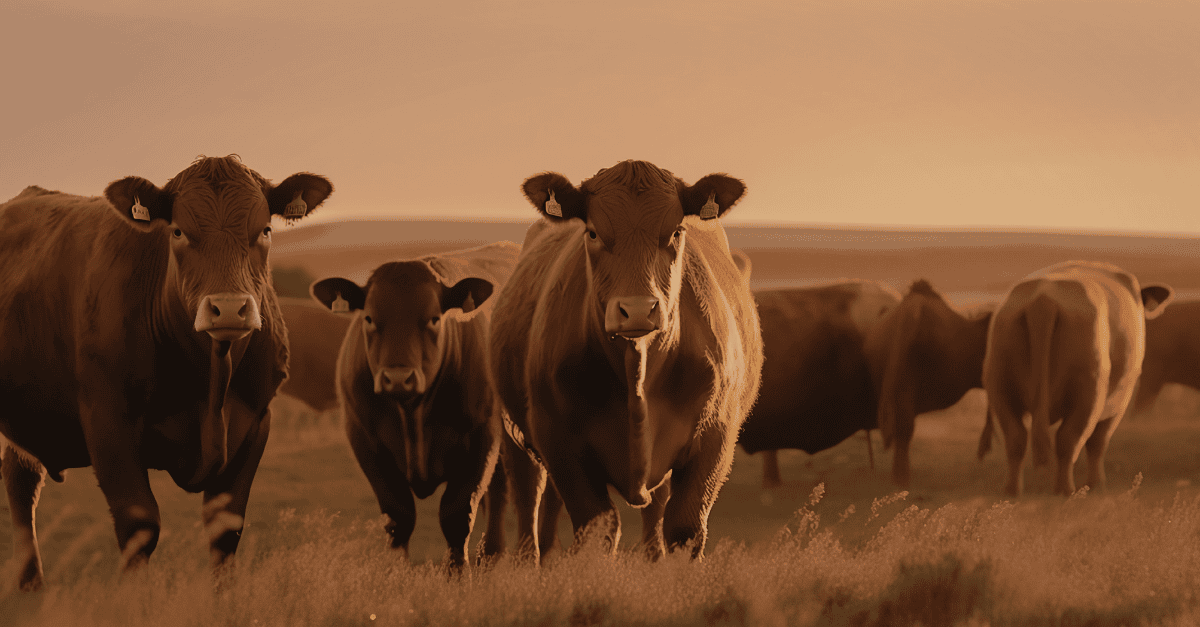
In addition to its direct impact on farmed animals, the agreement may increase trade in beef, leather and soy for animal feed. This could exacerbate deforestation and habitat destruction in sensitive ecosystems such as the Cerrado, Gran Chaco and Pantanal, with serious consequences for wild animals and biodiversity.
The agreement does include one positive element: a provision requiring Mercosur exports of shelled eggs to comply with EU standards under the laying hens Directive. While this sets an important precedent by recognising the possibility of linking tariff preferences to animal welfare conditions, its practical impact is likely to remain limited, given the very low trade volumes in shelled eggs between the two regions. It does not address the most significant welfare impacts associated with beef and poultry trade.”
Latin American perspective
Proyecto ALA: “This agreement is not considering animal welfare, at least from our geographical end. The fact that there are no minimum animal welfare standards required for Mercosur countries sets a huge question mark not only on where we are on animal welfare standards in this region, but also on what interest Mercosur leaders see in having high animal welfare standards.
It appears to be an incentive for Mercosur countries’ producers to continue producing at their current animal welfare standards or even lower them, as there may be no impact should they decide to be involved in the trade agreement. Furthermore, it is no secret that increased production, particularly cattle, has a direct impact on deforestation, biodiversity, and climate change.
It is also concerning that Bolivia, the newest state party of Mercosur, is a country with low animal welfare standards. It is quite challenging to find anything at all on Mercosur’s website regarding animal welfare.”
LatinGroup for Animals: ”The EU-Mercosur agreement, in its current form, presents far more risks than opportunities for animals in our region. Its central flaw is that it expands trade in animal products without requiring those imports to meet animal welfare standards comparable to those in the European Union.
Whilst World Organisation for Animal Health (WOAH) standards provide a global technical baseline, the EU has built a much higher regulatory framework on animal welfare under the European Green Deal and Farm to Fork Strategy. For this reason, European farmers argue that they produce at a higher cost because they must comply with stricter rules, considering it unfair that this deal permits Mercosur countries to trade on preferential terms.
We are wary that this could create downward pressure on standards in Europe and, of particular concern for our region, reduce incentives to strengthen animal welfare. We have unfortunately already seen how Argentina recently lifted the prohibition on live animal transport, and we are concerned this type of regulatory shift could expand through the region.
On the relatively positive side, the agreement explicitly recognises animals as sentient beings and establishes a dedicated dialogue on animal welfare, creating a formal space for the EU and Mercosur to exchange on these standards. However, these provisions are purely cooperative, committing parties to dialogue and exchange of information, but do not oblige them to adopt any particular practices.”
2. What aspects of animal welfare risk being overlooked?
European perspective
Eurogroup for Animals: “The agreement risks undermining policy coherence. The European Union has repeatedly committed to improving animal welfare through the Farm to Fork Strategy and the forthcoming revision of its animal welfare legislation. Allowing increased imports of products produced under lower standards runs counter to these ambitions.
Another often overlooked aspect is the cumulative impact of multiple trade agreements. The EU-Mercosur agreement is not an isolated case: similar dynamics can be seen in other negotiations, such as the EU trade deals with Australia and Thailand. Without a clear and consistent approach to animal welfare, the EU risks creating a race to the bottom.”
Latin American perspective
Proyecto ALA: “More than 10 years ago, there was a belief that this agreement could enhance animal welfare standards in Mercosur countries or even put these countries to work on higher standards. Now we see it is completely the opposite.
There are many consequences linked to low animal welfare standards. Let’s take live exports, an issue we at Proyecto ALA have been working on since 2016. Isn’t it a huge contradiction that whilst some European countries are finding their way to end the trade with live animals, every single country from Mercosur, including its newest member Bolivia, are looking for ways to increase it or develop it? This activity puts in danger several aspects of the Sustainable Development Goals, could be seen as contrary to pandemic prevention efforts, and contributes to biodiversity loss and climate change.”
LatinGroup for Animals: “There is significant variation in animal welfare regulation across the Mercosur region, especially concerning the four full members (Argentina, Brazil, Uruguay, and Paraguay). A trade agreement designed to last decades, but that does not embed clear, enforceable welfare benchmarks or strong incentives to raise standards, risks consolidating an already low welfare baseline compared to EU standards instead of helping to improve the treatment of animals in Mercosur countries.
Additionally, aquatic animal welfare is almost nonexistent in both Mercosur legislation and in the agreement’s text. This is a significant blind spot given that fisheries and aquaculture are growing sectors in the region, and millions of sentient aquatic animals are affected without any regulatory framework for their treatment.”
3. What commitments would be essential to protect animal welfare in the EU-Mercosur agreement?
European perspective
Eurogroup for Animals: “The deal represents a missed opportunity, as trade in key animal products such as chicken and beef is not conditioned on standards equivalent to those of the EU. Introducing meaningful conditionality at this stage would be legally and politically complex, given that the agreement has already been negotiated. For this reason, the EU should ensure that ratification does not take place before it has completed and adopted the revision of its own animal welfare legislation.
Moreover, the agreement in its current form should not proceed to ratification. The European Parliament has referred the deal to the Court of Justice to assess its compatibility with EU law, and advancing ratification before the Court delivers its opinion would be premature and politically sensitive. The agreement should also not be provisionally applied.”
Latin American perspective
Proyecto ALA: “There is often a gap between the commitments made in international forums and the implementation of those commitments domestically. This presents both challenges and opportunities for advancing animal welfare standards in the region.
For example, whilst some countries promote sustainability credentials internationally, recent incidents like the Spiridon II case in Uruguay, where cattle were stranded on a livestock transporter, highlight the ongoing animal welfare challenges in live export practices. Similarly, decisions to expand live animal exports present opportunities to strengthen welfare safeguards throughout these supply chains.
The key question is how trade agreements can serve as catalysts for progress rather than maintaining the status quo. Live exports, for instance, involve not only animal welfare considerations but also broader environmental and sustainability impacts, from ocean and air pollution to the achievement of Sustainable Development Goals.
As major livestock producers, Mercosur countries have different positions when it comes to animal welfare. However, they have an opportunity to demonstrate leadership by ensuring that economic development and animal welfare advance together. The challenge is creating trade frameworks that incentivise this alignment rather than treating them as separate priorities.”
LatinGroup for Animals: “We share the view expressed by countless other organisations that the agreement, in its current form, should not be ratified. The European Parliament’s decision in January 2026 to refer the deal to the European Court of Justice for a legal opinion is a welcomed step that hopefully creates space for meaningful reform. If the deal is to proceed, we fully align with the concrete proposals set out by Eurogroup for Animals and Animal Equality in their joint report.
Any conditionality or requirements must be accompanied by genuine support to Mercosur in order to transition to higher-welfare systems. The report rightly calls for accountable funds to finance the shift to cage-free and sustainable production, and for technology transfers to enable traceability and the elimination of cruel practices. For us, this is crucial. Without dedicated cooperation programmes, technical assistance, and transition funding, imposing EU-equivalent requirements would be unattainable.
Moreover, the agreement must protect the ability of Mercosur countries to move forward, rather than lock them into a low baseline. Several countries in our region have recently taken significant steps to advance their legislation: Paraguay adopted a new law recognising animal sentience in 2025, Brazil has pending legislation to ban cages and extreme confinement, and there are active legislative proposals across the region on humane slaughter and live exports. A well-designed trade agreement should reinforce and reward these efforts, not create economic incentives that undermine them.”
Building cross-regional dialogue on trade and animal welfare
The EU-Mercosur agreement highlights the urgent need for international cooperation on animal welfare in trade policy as essential for animals, people, and the planet. The agreement’s implications extend far beyond tariffs and market access, touching on fundamental questions about how countries value animals, protect ecosystems, and build sustainable food systems.
For more detailed analysis, read Eurogroup for Animals and Animal Equality’s report A Step Back for Animal Welfare: The Hidden Costs of the EU–Mercosur Agreement.
Follow us on X, Facebook, Bluesky, or LinkedIn, and subscribe to our Weekly Digest to stay informed on news that matter for animals.