An estimated 60% of known infectious diseases and up to 75% of new or emerging ones in humans originate in animals.
Recognising this animal-human health link is essential for securing global health. It is also a core pillar of the One Health approach, which recognises that human, animal, and environmental health and wellbeing are interconnected.
From 5-7 April 2026, France hosted the One Health Summit in Lyon, bringing together decision-makers, scientists, international organisations, and civil society to accelerate implementation of the One Health approach to address complex health challenges such as pandemics and antimicrobial resistance (AMR), thereby protecting global health security.
While animal diseases ultimately pertain to the physical health of animals, their emergence and spread are often driven by broader and more complex dimensions of human treatment of animals and wild habitats. The summit represented yet another opportunity for animal advocates to ensure animal welfare is recognised in global health discussions.
What the One Health Summit delivered for animals
By Nina Jamal from FOUR PAWS
What was the single most significant outcome or ‘win’ for animals at this One Health Summit?
The most significant outcome of the One Health Summit was a clear shift from viewing public health in isolation, towards recognising the importance of protecting animals and the environment: animal welfare moved closer to the centre of global health discussions as a precondition and a success factor for preventing disease outbreaks that can turn into pandemics and exacerbate the challenge of AMR.
The summit elevated a principle that scientists and civil society, including FOUR PAWS, have long advocated: complex health challenges at the human-animal-environment interface require a One Health approach that recognises animal welfare not as a side issue, but as a core pillar in preventing future pandemics.
By improving animal welfare and addressing high-risk practices such as factory farming, wildlife trade or live animal markets, we can significantly reduce the risk of disease emergence, spread and spillover to humans.
Getting this message echoed among governments, international organisations, and scientists marks a meaningful step forward. The recognition that we must address risks at their source creates space for policies that improve animal welfare whilst protecting public health.
The main win was recognition and alignment at the highest levels of governments that effective solutions already exist, and that prevention via One Health must be prioritised, funded, and implemented.
How will these high-level discussions translate into better protection for animals on the ground?
FOUR PAWS outlines a clear pathway:
- Shifting priorities enables action: When governments recognise the importance of prevention at source in achieving health for all, it creates momentum for addressing high-risk practices and increasing investment in preventive measures. This means resources can flow toward alternatives to intensive farming, stricter regulations on wildlife trade, and support for communities to transition away from practices that put both animals and people at risk.
- Moving from knowledge to implementation: Effective solutions already exist. The priority now is scaling and enforcing practices that improve animal welfare, including more sustainable, higher-welfare farming systems, habitat protection that keeps wild animals in their natural environments, and responsible antimicrobial use.
- Linking global policy to local impact: Aligning international frameworks with on-the-ground initiatives ensures that policy commitments lead to practical changes, such as improved animal welfare standards and earlier risk mitigation at the community level.
- Strengthening pandemic prevention: Improving the conditions in which animals are kept, such as reduced stock density, more resilient breeds, better nutrition, lower stress, and their overall welfare, reduces the risk of zoonotic disease transmission, thereby lowering the likelihood of future pandemics.
The science and solutions are already there. What will determine real impact for animals and public health is whether governments follow through with political will, sustained investment, and context-specific implementation.
Why One Health matters for animals
Apart from health security, antimicrobial use and pandemic prevention, the One Health approach is relevant to several other policy areas where animal welfare has traditionally been overlooked:
- For food systems and water security: Improved welfare and husbandry of farmed animals reduces the unnecessary use of antimicrobials, consequently lessening the risk of contaminating waterways and naturally reducing resistance in humans. One Health addresses these risks by transitioning to higher-welfare systems that safeguard water quality for both humans and animals.
- For environment, biodiversity, and climate change: Animals play a vital role as “ecosystem engineers” and “climate allies” by undertaking natural behaviours that keep whole ecosystems functioning. One Health recognises that protecting animal wellbeing is interdependent with maintaining biodiversity and climate stability.
- For sustainable development: Animal welfare is integral to achieving multiple Sustainable Development Goals (SDGs). One Health allows policymakers to enable the design of policies that deliver multi-sectoral and multi-SDG benefits.
What comes next
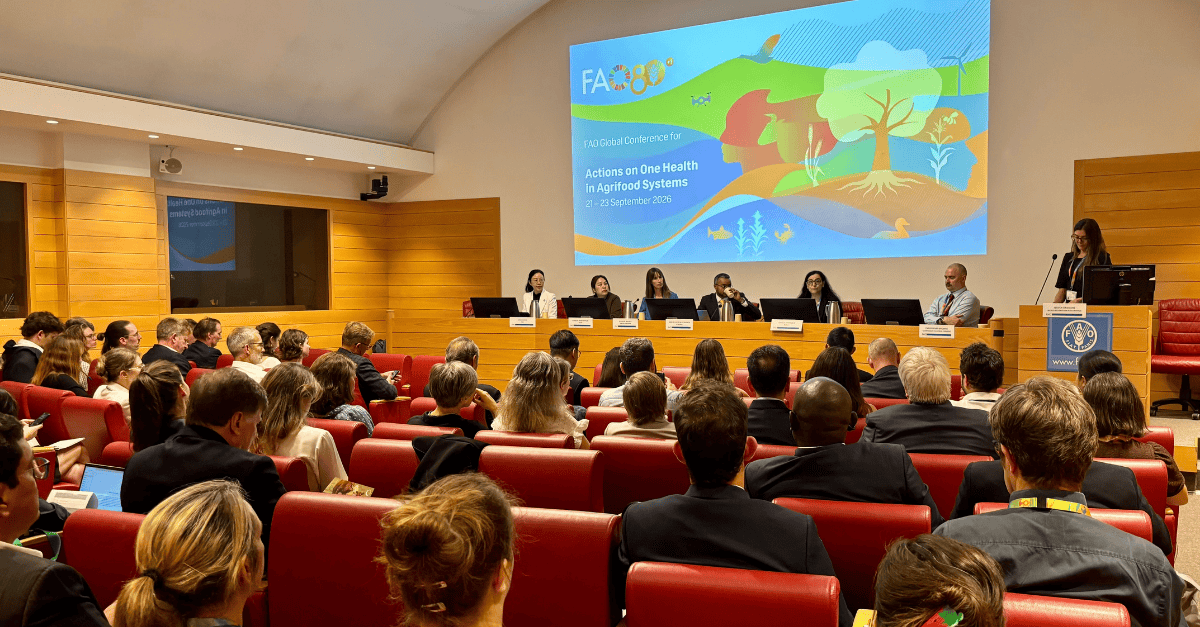
The One Health Summit elevated animal welfare within global health discussions. The next phase is translating this recognition into funded programmes and enforceable standards. Upcoming milestones are the WHO and WOAH General Assemblies, followed by the FAO One Health Conference and the UN General Assembly in the final quarter of the year.
FOUR PAWS and other members of the WFA will continue working to ensure animal welfare remains central to One Health implementation as a practical pathway to preventing pandemics, reducing antimicrobial resistance, and building more sustainable and resilient food systems.
Follow us on X, Facebook, Bluesky, or LinkedIn, and subscribe to our Weekly Digest to stay informed on news that matters for animals.