On 18 June 2026, during the mid-year climate negotiations, government representatives of Brazil, the Democratic Republic of Congo, Zimbabwe, and Chile discussed the policy implications of the Scientific Consensus on Wildlife and Climate. Backed by hundreds of scientists worldwide, the Consensus affirms the vital role of wild animals in climate action and calls on governments to account for them in climate policy.
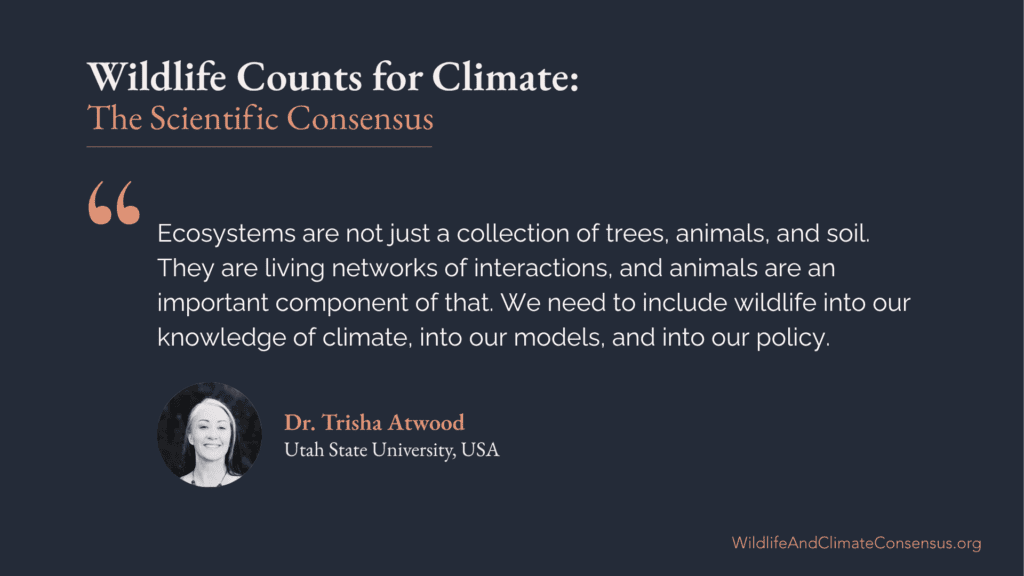
Following a presentation by two of the scientists behind the Consensus, Dr Trisha Atwood and Dr Nathan Roberts, these government representatives reflected on how this connects to what their respective countries are doing and where it may challenge current framings.
This conversation between policy-makers and academics was co-hosted by the World Federation for Animals (WFA), together with the International Fund for Animal Welfare, Eurogroup for Animals, and the Government of Zimbabwe, as an official side event at the 64th meeting of the subsidiary bodies of the UNFCCC.
What the science shows
Dr. Atwood and Dr. Roberts set out how wild animals, from invertebrates to large mammals, across land, freshwater and marine systems, shape the processes that govern carbon sequestration and storage in ecosystems.
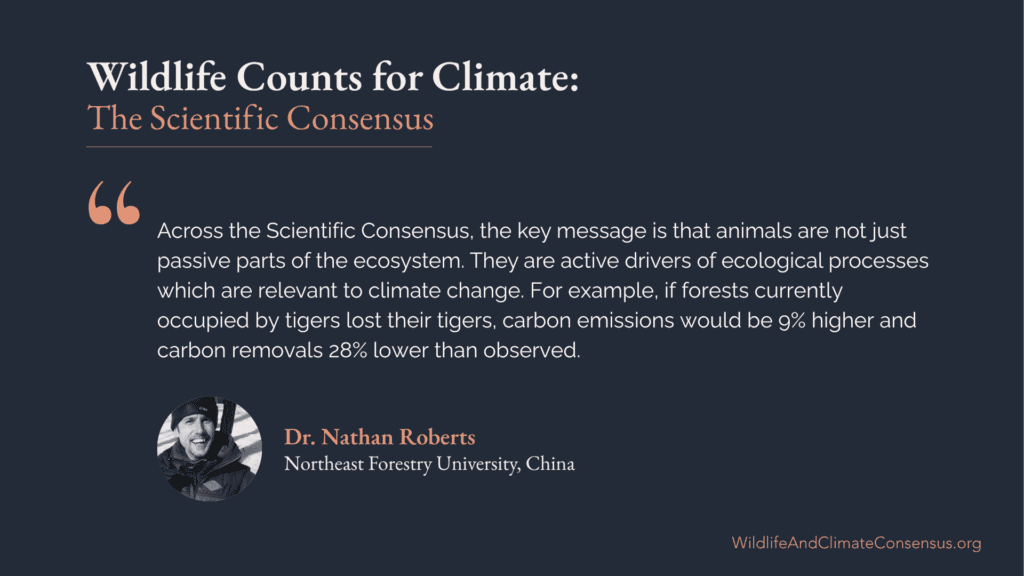
Two examples helped illustrate the point. In forests currently occupied by tigers, losing those tigers would mean carbon emissions would be 9% higher and carbon removals 28% lower than observed today. In coastal seas, sharks shape where grazing happens across the seascape, influencing the distribution of seagrass biomass and carbon storage.
These examples are not isolated case studies. As Dr. Roberts explained, the Scientific Consensus draws on evidence from across species, ecosystems, regions, and disciplines through a rigorous and collaborative process. It is this breadth of evidence that makes the Consensus statement a strong foundation for governments to create effective climate policy.
From science to policy
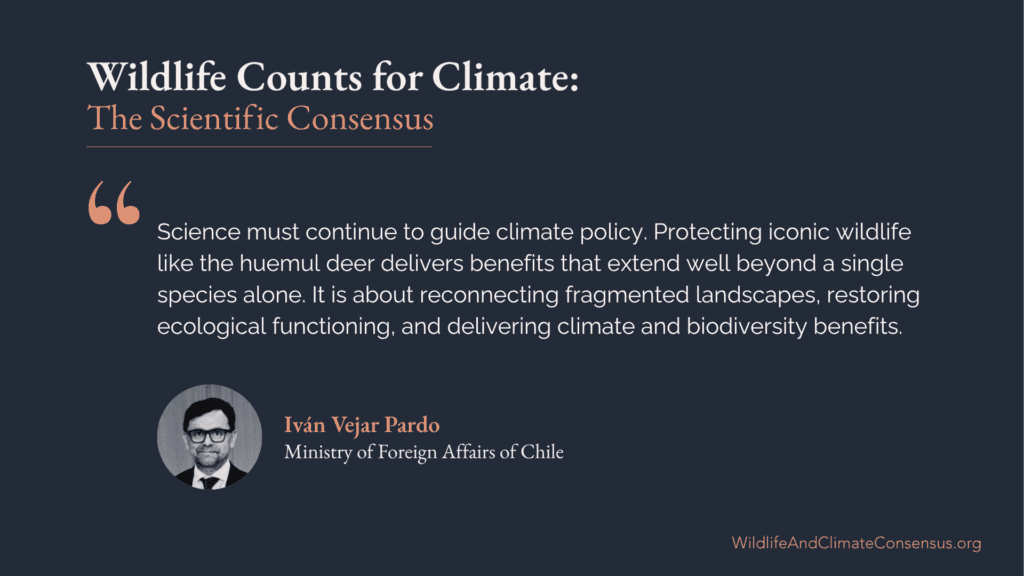
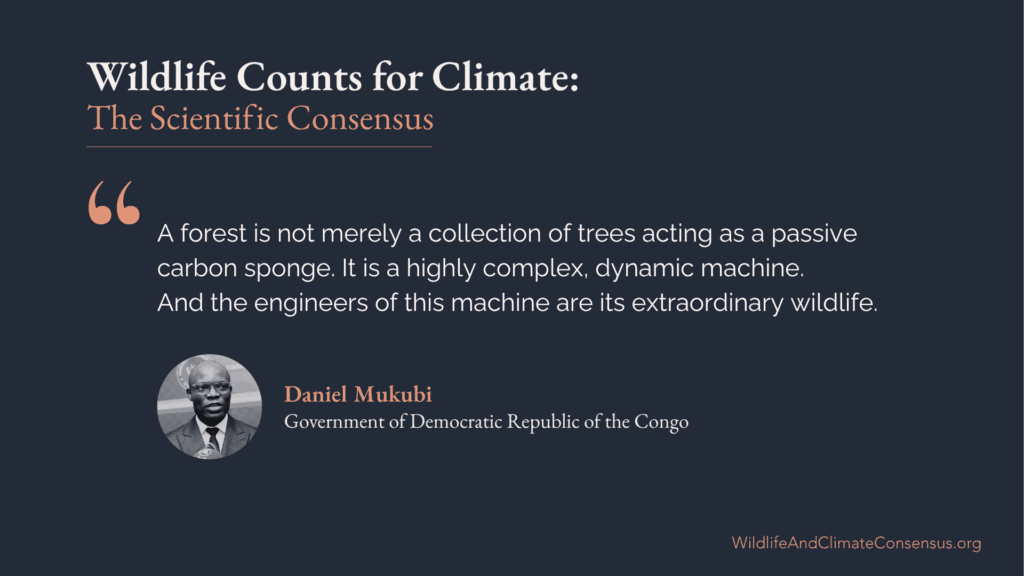
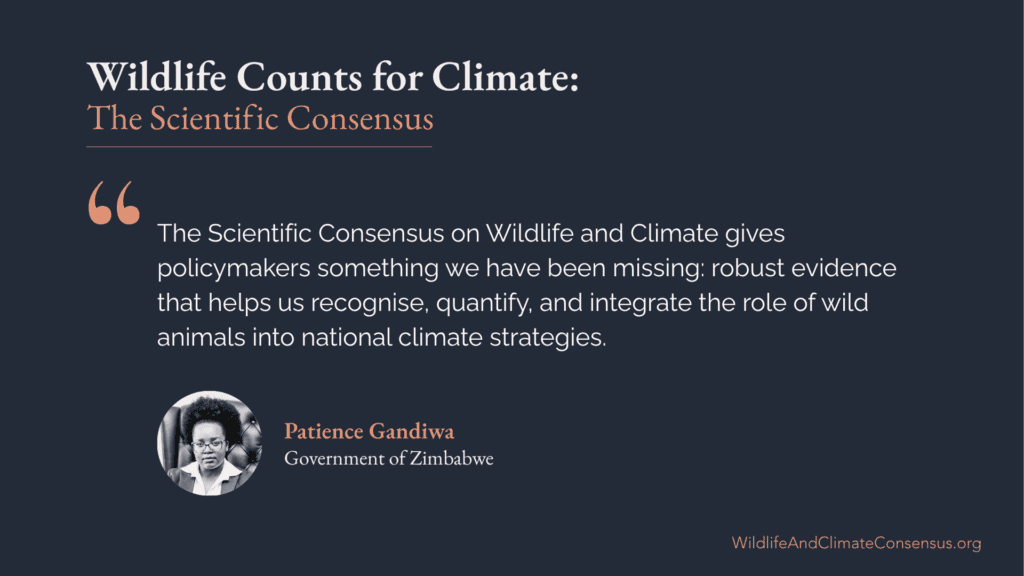
Following the evidence, government representatives reflected on how this connects to their respective countries – highlighting where the science aligns with existing efforts, and where it provides further opportunities to include wild animals in national climate strategies.
After this, in an interactive exchange, policymakers asked the scientists their questions about the evidence, allowing for a discussion on how it could inform planning and decision-making in their respective ministries.
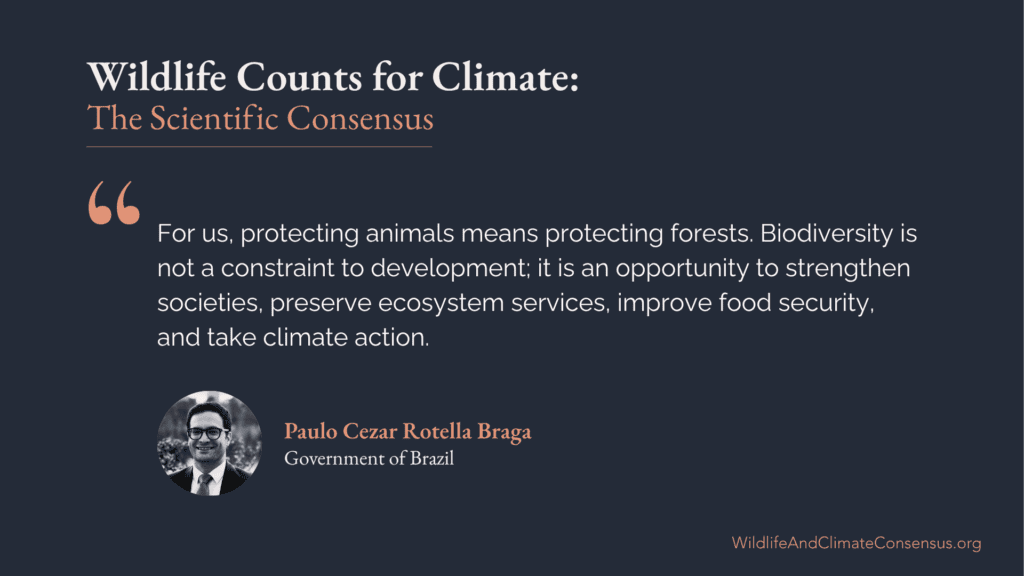
Taken together, the scientific evidence and policy reflections converged on one clear message: that protecting wild animals is a credible and effective climate solution.