Countries are on track to meet fewer than half of their national biodiversity targets. This makes this year’s UN Biodiversity conference a critical milestone to close that gap and advance global negotiations.
From 19 to 30 October 2026, governments and other stakeholders gather in Yerevan, Armenia, for the 17th meeting of the Conference of the Parties to the Convention on Biological Diversity (CBD COP17). It is the first global review of the Kunming-Montreal Global Biodiversity Framework, which countries agreed in 2022 to halt and reverse biodiversity loss by 2030.
The outcomes from COP17 will directly affect animals. Decisions made in Yerevan on wildlife management and use, food production systems, climate resilience, public health, finance and subsidies, among others, can help prevent animal suffering and protect their survival.
At COP17, WFA will ensure that animal health and welfare are treated as an essential part of effective biodiversity action by focusing on these four items.
Priorities for animals at COP17
Global review of collective progress: closing the implementation gap
Despite growing engagement, practical implementation is not advancing fast enough to achieve the Biodiversity Framework’s 23 targets. Progress is particularly slow on mobilising finance, reforming harmful subsidies, addressing business impacts, and shifting unsustainable consumption. Many countries still invest in practices that harm nature and animals, such as intensive production systems that drive habitat loss, pollution and poor animal welfare.
During COP17’s global review of collective progress, WFA calls on governments to accelerate the reform of incentives and subsidies and redirect public and private finance towards biodiversity-friendly, climate-resilient, and higher-welfare practices. These can deliver benefits for animals, people, and ecosystems together. For animals, this means that progress must also consider their health and welfare, the conditions in which they live, and whether they are able to carry out natural behaviour which allows them to continue performing ecological roles such as pollination, seed dispersal, and nutrient and carbon cycling.
Global guidance on sustainable wildlife management
At COP17, governments will consider the adoption of the first CBD-wide voluntary global guidance on how species are used, harvested, and traded. “Sustainable” wildlife management is often measured by whether a species’ numbers hold steady, overlooking the animal’s welfare and health safeguards across the entire chain (capture, handling, transport, trade and killing). However, it must mean more than leaving enough animals for future use. Practices may be legal or considered biologically sustainable while still causing severe animal suffering, disrupting ecosystems, or increasing disease risks.
Building on the discussions from SBSTTA-28, WFA recommends that the final guidance sets clear limits, recognising that some practices cannot be sustainable, safe or ethically responsible. Just as important, the rights, knowledge and customary practices of Indigenous Peoples and local communities must also be respected. These communities must have a real voice in the rules that affect them.
One Health and disease prevention at source
COP17 is the first since countries adopted the Global Action Plan (GAP) on Biodiversity and Health, which recognises the interconnectedness of animal, ecosystem, and human health. In Yerevan, governments have an opportunity to turn this plan into national action, prioritising prevention.
Animal welfare is one of the most practical tools available for disease prevention. Better conditions on farms and in wildlife trade lower the chance of disease jumping from animals to people. These better practices also reduce unnecessary antibiotic use, helping to slow antimicrobial resistance (AMR), the growing ineffectiveness of medicines we all depend on.
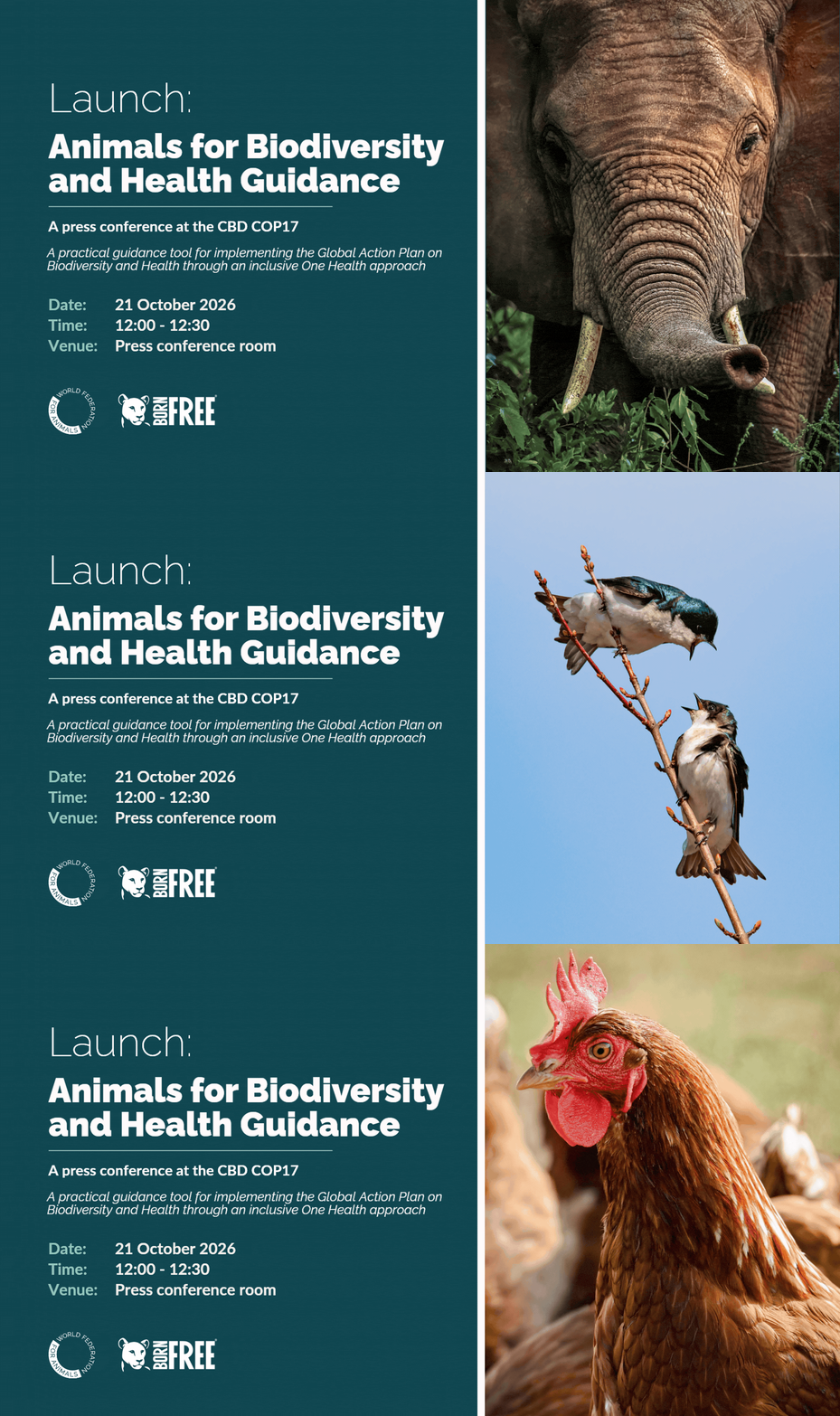
At CBD COP17, WFA will launch new practical policy guidance to support national implementation of the GAP on Biodiversity and Health. The guidance translates global commitments and actions from the Plan into a menu of practical policy options that governments can adapt to their national circumstances.
A parallel road to the climate negotiations
During this round of biodiversity negotiations, one point that countries will discuss is the links between biodiversity loss and climate change. As part of these discussions, countries in the last round of the biodiversity negotiations already recognised that conserving and restoring animal populations are effective options for mitigation, adaptation, and disaster risk reduction. One of WFA’s priorities will be to work with countries to ensure that the protection of wild animals will continue to be recognised as an action towards minimising the impacts of climate change.
This comes on the heels of a parallel process under the United Nations Framework Convention on Climate Change (UNFCCC), with similar recognition expected to culminate in the launch of a global political declaration by several countries around the world.
Join us at COP17
The Federation and partners will be hosting and contributing to several events featuring animal welfare and its links with food systems, climate change, health, and other key areas for biodiversity action. Take note for your COP17 agenda and click on each title to see the full session details.
Protecting Ocean Life, Powering Climate Solutions
🗓️ 10:30–11:45 📍Ocean Pavilion
Delivering Nature Positive Climate Outcomes Through Wildlife Conservation and Restoration
🗓️ 16:30–17:30 📍Nature Positive Pavilion
🗓️ 12:00–12:30 📍Press conference room
Watch online: https://webtv.un.org/en/schedule
Wildlife as a Missing Climate Solution: From Scientific Consensus to Political Action
🗓️ 14:00–15:00 📍 IUCN Pavilion
🗓️ 16:00–17:00 📍Action Zone NGO Hub
🗓️ 09:00–10:00 📍Data in Action/GEO BON Pavilion
Looking ahead
COP17 comes at the halfway point between the adoption of the Global Biodiversity Framework and its 2030 deadline. There is little time left to replace fragmented commitments with implementation that can be measured.
The decisions taken in Yerevan will need to be carried into national laws, budgets, biodiversity strategies and everyday practice. This next phase of implementation must recognise a simple truth: protecting biodiversity requires protecting the animals who sustain it.
Follow us on X, Facebook, Bluesky, or LinkedIn, and subscribe to our Weekly Digest to stay informed on news that matters for animals.